
Weekly Email
Welcome to your weekly digest! Here are the latest updates from the past week.
Latest Videos:
Plex App Update : Music & Photos Returning to Apps, TV Preview Gets an Update
GMKTec G10 Mini PC Review : Cheap with Compromises
Congress is about to MANDATE AM Radios in Cars
GMKTec G10 Mini PC Review
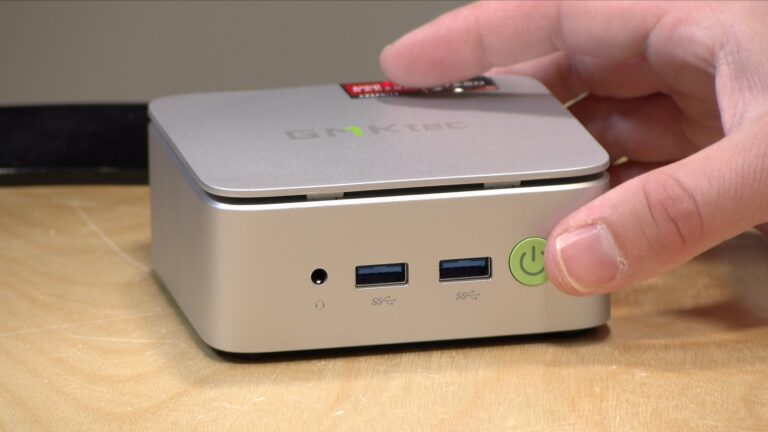
In my latest Mini PC review video, I take a look at the new GMKTec G10. This one is on the lower-end of the price scale (compensated affiliate link), and reminded me a bit of their other low cost machine G3 Plus, which I liked for its low cost and practical design. The G10 comes in a bit higher in price but swaps in a Ryzen processor, specifically the older 3500U that can perform a little better in some applications.
My G10 review unit came with 16GB of RAM and 512GB of storage, and it’s easy to open up and upgrade. There are two NVMe slots inside, and the unit can support up to 64GB of RAM and 16TB of total storage—though you’ll need to work around a pretty tight layout. One NVMe slot overlaps the RAM modules, which makes things a little cramped. It’s all housed in a plastic case, nothing premium, but serviceable.
On the front are two 5Gbps USB-A ports and a headphone/mic jack. Around back, there’s a USB-C port that supports data, video, and power delivery, along with a second USB-C port that’s power-only. There’s also USB 2.0, 2.5Gb Ethernet, HDMI, and DisplayPort outputs. Combined with the USB-C video output, you can run three independent displays. Wi-Fi is limited to Wi-Fi 5, and the Ethernet and wireless chips use Realtek controllers.
Right out of the box, performance is a bit underwhelming. By default, the BIOS is set to a balanced mode that limits the processor to 15W. Switching to the high-performance mode bumps that up to 35W, which improves performance, but thermal issues start cropping up. I ran a 3DMark stress test and initially got poor results—even in performance mode—until I manually configured the fan to run at 100%. With the fan running constantly, I got much better stability and higher benchmark scores. It’s louder than I’d like, but not the worst I’ve seen.
Windows 11 Pro comes pre-installed and activated. In high-performance mode, it feels snappier than Intel N150-based mini PCs, especially at 4K60. Browsing is responsive, though I noticed some dropped frames when playing back 4K60 video from YouTube. It eventually smooths out, but not quite to the level I’ve seen from newer Intel chips in the same price range.
Benchmarking with browserbench.org’s Speedometer test gave me a score of 11.2 in performance mode and 7.63 in balanced mode. It does beat the N150 when pushed in the higher TDP, but just barely.
Gaming is possible at the low end. GTA V at 720p and minimum settings averaged around 45 to 50 frames per second. Emulation performance was mixed. PS2 titles like Burnout Revenge didn’t run very smoothly, even with performance settings. Older consoles and retro-style games should run fine, but don’t expect this to handle more demanding emulators consistently.
In the Time Spy benchmark, the G10 scored 756 in performance mode and 394 in balanced mode. On paper, that’s better than the N150, but in practice, I saw smoother emulation on the Intel system. I suspect that the older CPU architecture and slower RAM are contributing to that gap.
Linux support seems solid. I tried Ubuntu 25.04 and had working Ethernet, Wi-Fi, Bluetooth, audio, and video. An earlier version of Ubuntu didn’t detect Ethernet, but the latest build corrected that. Linux felt more responsive than Windows in balanced mode, likely due to lower system overhead.
Idle power consumption came in at around 11–12 watts in balanced mode and 20 watts in performance mode. For those thinking of using it as a low-cost server, it could work, but you’ll want to put it somewhere where the fan noise won’t be a annoyance.
Overall there are some compromises with this device. Thermals need hands-on tweaking, and the older chip architecture shows in areas like video playback and emulation. I’d probably still recommend the Intel N150-based mini PCs for most people, especially if your budget is tight and you’re looking for a quieter and more polished experience. Still, for the right use case—like a small home server or a Linux box—the G10 has its place.
Disclosure: GMKTec sent the Mini PC to the channel free of charge. They did not review or approve this video prior to uploading, no additional compensation was received, and all opinions are my own.
Plex to add Music & Photos Back to New TV and Mobile Apps (sponsored post)
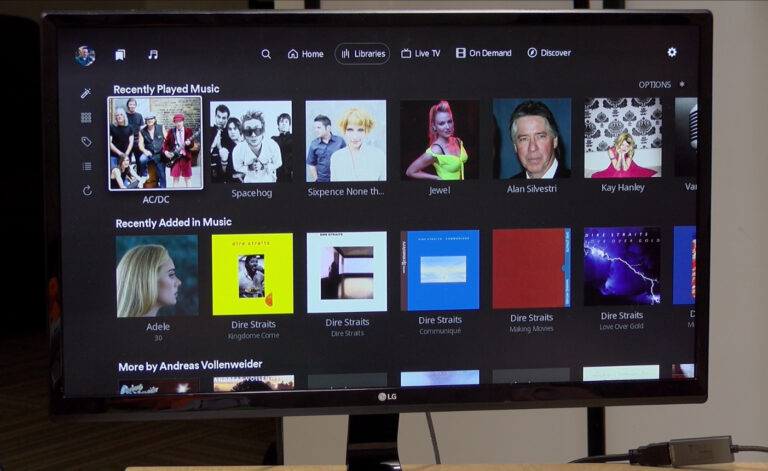
Plex has been moving forward on the roadmap they laid out for their personal media server, and one of the more notable changes is already live—the new mobile app. Alongside that, they’ve been working on a redesigned TV app that’s still in beta. A major part of this update involves how Plex handles music and photos. The original plan was to move both into their own standalone apps—Plexamp for music and a separate Photos app. While that rollout did happen, it generated a lot of pushback from users who preferred having everything in one place – especially on the TV.
Plex responded to that feedback with a new preview version of their TV app, currently available only on Roku. This version brings music and photo libraries back into the mainline app experience. You can see it in action in my latest monthly sponsored Plex video.
Plex says that other platforms will follow, although there’s no timeline yet. Even as those features return to the main app, the standalone Plexamp and Photos apps will continue to be supported.
The apps all share a new architecture that should make cross-platform updates easier going forward. I spent some time testing the preview version on Roku to see how these reintegrated features are coming together.
Music playback is functional and similar to the current Plex TV experience. After selecting a music library, it’s possible to browse by artist, view popular tracks, and start playback. There’s a waveform visual, lyrics support, and playback is handled with attention to audio quality—lossless files will pass through if the device supports them, and the server will transcode when necessary.
Photo support is also back and works in a similar way to what users are accustomed to on the current Plex TV app. Photos and videos can be mixed in albums, and the experience includes recommendations and folder-based album navigation. There’s also a working slideshow feature via playlists. The only missing piece I noticed was the ability to manually reorder photos within a playlist, which doesn’t seem to be working yet.
The current preview app runs separately from the standard Roku Plex app, so there’s no risk of losing access to existing setups. Instructions for installing the Roku preview are posted in the Plex forums, and the team is encouraging feedback there.
So music and photos are back on Roku, and more platforms will follow. If you’re a Plex user who relies on those features, this preview is worth checking out—and if you have feedback, now is a good time to share it!
Congress is About to MANDATE AM Radio in Cars
When I was a kid, my dad used to drive me to work with him during the summers. He had this 1990s-era Mercedes-Benz, and every morning we’d listen to New York AM radio on the way in. Imus in the morning on 660 WFAN, and news on WCBS 880 on the way home. It felt like everyone was tuned in. But a lot has changed, and now Congress is stepping in to keep AM radio alive.
Learn more in my latest video.
There’s a bill moving through Congress that will require all vehicles sold in the U.S.—electric, gas, whatever—to include an AM radio. It has bipartisan support, with 60 co-sponsors in the Senate and 241 in the House. All of this support across the political divide means that this actually might happen. Plus, many members of Congress appear on morning AM radio programs so they have a personal connection to their local stations.
Tesla and BMW haven’t included AM radios in their electric vehicles for over a decade. More recently, other manufacturers have removed AM radios from their EVs and hybrids. The motors in electric vehicles interfere with AM reception because they resonate on similar frequencies to AM radio broadcasts. Automakers have instead opted to offer FM or digital streaming options. In some cases, you can even get AM radio through an HD FM subchannel. That workaround seems to have satisfied most customers so far as there hasn’t been a huge consumer outcry.
Still, the bill would give the Department of Transportation a year to write rules requiring all new vehicles to receive AM broadcasts. There’s a small out for EVs: they can meet the requirement with a digital-only AM receiver, which may be easier to implement. The bill also orders a GAO study on emergency alerts and whether AM is still the best option. There’s a 10-year sunset clause too, so the mandate isn’t forever unless Congress renews it.
The National Association of Broadcasters is backing the bill. That’s not surprising—they see it as essential to preserving AM radio’s role in emergency communications. Senator Ed Markey has been a vocal supporter, citing the unreliability of the internet during emergencies. But it’s worth noting the irony here: while he defends AM as a critical emergency resource, broadcasters are encrypting over-the-air TV signals, which in many cases require an Internet connection to tune into. If emergency access is the priority, maybe it’s time to talk about over-the-air TV encryption too.
On the other side, the Consumer Technology Association is spending heavily to oppose the bill. They argue that nearly everyone now gets emergency alerts through their phones. They cite a survey showing 95% of people remembered getting an alert on their smartphones during a nationwide test, compared to just 1% who heard it on AM radio.
Industry estimates suggest it could cost $3.8 billion to reintroduce AM radios into EVs. Shielding, filters, multiple antennas—it’s not a simple fix. But the law only says a car has to have an AM radio, not that it works particularly well. So automakers may just aim for “good enough.”
AM radio’s advantage is its reach. Because it operates at lower frequencies than FM, its signals travel much farther—especially at night. A powerful AM station can broadcast 100 to 200 miles during the day and sometimes thousands of miles further after dark, thanks to atmospheric bounce. That makes it valuable in emergencies, especially if power is out and people are fleeing in their cars. FM doesn’t cover the same ground, even at similar power levels.
Still, listenership trends are hard to ignore. Back in 2009, the FCC found that just 4% of 12–24-year-olds listened to AM radio. Even among 25–34-year-olds, it was only 9%. The median AM listener back then was 57 years old. In my own YouTube poll, 72% of respondents said they don’t listen to AM radio at all. Just 5% use a streaming app to tune in. It’s anecdotal, sure, but it lines up with national trends.
Despite all that, traditional radio—AM and FM—is still surprisingly strong. A 2022 Pew/Nielsen study found that 82% of Americans tune into radio weekly, and nearly half get some news from it. But podcasting is clearly catching up. According to Edison Research, daily podcast listening has skyrocketed across every age group since 2017. That growth is particularly pronounced among older adults—radio’s core audience.
What’s striking from the Edison Research report is that people mostly listen to podcasts at home. In the car, it’s still over the air AM/FM radio. And most people still commute alone by car according to Census data. Some of the comments on my YouTube poll echoed this. Respondents who retired or no longer have a commute stopped listening to the radio.
So if the radio disappears from the dashboard and a podcast button shows up instead, that’s a major threat to broadcasters. This bill feels like an effort to hold off that transition for just a little while longer.
This mandate, if it passes, won’t turn back the clock and will likely result in interference-ridden radio buttons that EV drivers won’t tune into.
Older Videos:
Free App Hidden Gem: Starss for iPad - A Star Trek themed RSS news reader!
Digital Games 20 Years Later: Apple wiped many of my purchases! #stopkillinggames
UPDATE: Can 8bitdo Controllers Wake the Switch 2? Nope.
Asus ROG Strix G16 (2025) Prime Day Gaming Laptop Review - G615JMR-AS74
Amazon Gadget Haul 10 ! Pre-Prime Day Edition
Lenovo Chromebook 14 Plus with MediaTek Kompanio 910 Ultra Review
How To Unlock a More Powerful Plex Watch List !
No More Data Caps on Comcast / Xfinity! But you gotta call..
Lenovo Legion Go S with SteamOS Review ! First Licensed SteamOS Handheld
Beelink ME Mini NAS / Server Review - Six NVME Slots for Compact Storage
Items for Sale / Auction:
Switch 2 Joy-Con 2 Charging Grip (Brand New in Box)
Movo Phone Video Kit - Includes grip, light, mic and more
Wavlink Thunderbolt Hub / Docking Station
Kensington LD5400T Thunderbolt 3 Dual 4K Dock w/K-Fob Smart Lock, 85W
Crossbows and Catapults game (2024 remake)
For Sale : A number of Kensington VESA display mounts on my Ebay page.
Today's Links:
ByteDance is challenging Meta in the virtual reality of wearable tech
Belkin shows tech firms getting too comfortable with bricking customers’ stuff
Streaming accounted for 46% of US TV viewership in June
"BattleDock" is a GameCube Controller Dock for the Switch 2 | RetroRGB
"Andor" Gets 14 Emmy Nominations
Disney+ Launches 24/7 Throwbacks Live Channel Featuring Classic 1990s and 2000s Cartoons
Max has been renamed back to HBO Max as Warner Bros. Discovery prepares to split company
Another streaming device manufacturer pulls its Android TV 14 update
ChromeOS and Android to Merge?
NotebookLM introduces curated featured notebooks with partners